

AREA IMPACTS
Sonoma County
The impacts of decommissioning the Potter Valley Project will be profound in Sonoma County as it will significantly reshape water management, environmental conditions, and economic activity throughout the county, with implications extending far beyond environmental restoration.
Water Supply & Regional Water Management
For more than a century, the project has diverted water from the Eel River into the Russian River watershed, providing a substantial portion of the Russian River's summer flows. These augmented flows support municipal water systems, agriculture, industry, recreation, groundwater recharge, and aquatic habitat throughout Sonoma County. For example, the City of Santa Rosa receives roughly 95% of its total drinking water supply from the Russian River watershed. In normal, wet years, the upper Russian River (upstream of Healdsburg and coming from Lake Mendocino) supplies the consistent foundational volume for Santa Rosa’s water needs.
Economic & Agricultural Impacts
According to an economic impact analysis commissioned by the Sonoma County Farm Bureau, even a modest 10 percent reduction in water currently supplied through the Project would result in an estimated $67.5 million in annual economic losses to Sonoma County, with that loss compounding each year. Those losses would ripple throughout the regional economy, affecting agricultural production, business revenues, employment, consumer spending, and local tax receipts.
Agriculture would experience some of the most immediate consequences, particularly the county's premium wine-grape industry, which relies on dependable water supplies during increasingly frequent droughts. Reduced irrigation reliability would likely decrease crop yields, increase production costs, reduce vineyard investment, and negatively affect the extensive network of wineries, hospitality businesses, tourism operators, suppliers, and seasonal workers that depend on a healthy agricultural economy. The report concludes that these impacts would not remain confined to agriculture but would extend to the commercial, municipal, and residential sectors, illustrating the interconnected nature of Sonoma County's water-dependent economy.
Alternative Water Supplies
Reduced summer flows would lessen water available for municipal providers, increase groundwater pumping, heighten competition among water users, and require significant investments in alternative water supplies, expanded storage, recycled water systems, conservation programs, and regional infrastructure improvements.
Sonoma County agencies have acknowledged that continued diversion is essential to maintaining water reliability for communities, agriculture, and environmental flows in the Russian River watershed. They have been designing what they hope to be a valid successor facility or comparable alternative through the New Eel Russian Facility, however, water cannot be diverted unless the unimpaired flow in the Eel River exceeds the seasonal flow floor (established in the Water Diversion Agreement). Even once met, the diversions are limited to no more than 30% of the flow, so long as the flow never falls below the required minimum. In 2026, for example, during what has been considered a “good” rainfall year, no water would have been diverted under this arrangement.

Long-Term Water Security & Public Costs
Historical records indicate that, absent Potter Valley diversions, Lake Mendocino would have reached critically low or dry conditions in numerous years without additional intervention, underscoring the project's longstanding role in regional water security.
Consequently, the financial costs associated with removing the Potter Valley Project extend well beyond the direct economic losses estimated by the Farm Bureau's analysis and include substantial public expenditures necessary to replace lost water supplies, adapt existing infrastructure, and preserve the economic vitality of Sonoma County's communities.
Wildfire Protection & Insurance
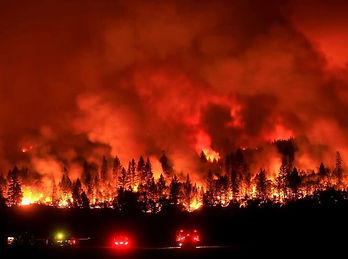
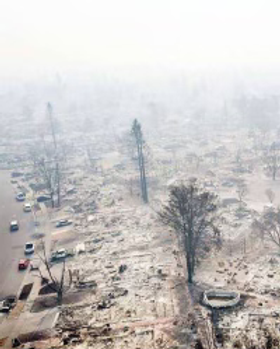
The compounding crisis of shrinking reservoirs and falling groundwater tables across Lake, Mendocino and Sonoma counties does more than threaten agriculture and residential wells—it is fundamentally breaking the local fire suppression network, which in turn causes property insurance rates to surge.

When insurance underwriters and the California FAIR Plan assess a property’s wildfire premium, they rely heavily on its Public Protection Classification (PPC) score, calculated by the Insurance Services Office (ISO). A full 40% of that critical risk score is based entirely on one thing: the local water supply system’s capacity to fight fires.
California’s FAIR plan will increase average rates by 29.1% in October 2026, and those in high-risk areas will rise more, from 30 – 50%. For those that can still get standard private insurance, high risk area premiums may go up as much as 60%.
The decommissioning of the Potter Valley Project could significantly impact Sonoma County’s water supply, agricultural economy, wildfire protection, and communities, creating long-term challenges for water reliability, economic stability, and public safety.